How Long Do Liposuction Farmington Hills Results Last?
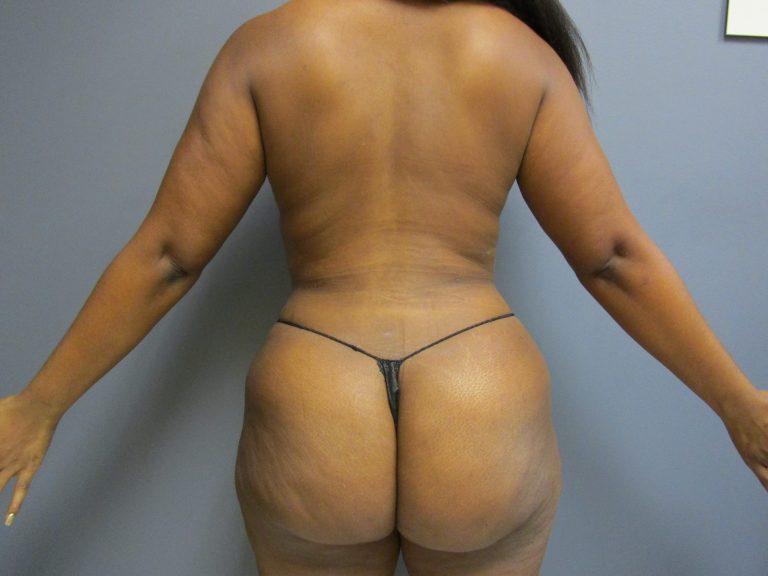
Liposuction results can last for many years, often indefinitely, but that answer needs context. In real practice, the longevity of the result depends less on the procedure itself and more on what happens after the swelling fades, routine returns, and life keeps moving. Pregnancy, menopause, stress, weight changes, medications, and plain old aging all shape the body over time. Liposuction does not freeze any of that.
What it does do, when performed on the right candidate and followed by stable habits, is permanently reduce the number of fat cells in the treated area. That matters. It means the contour change is real, not temporary. It also means the body may continue to look more balanced years later, even if the patient gains or loses a modest amount of weight.
For people researching Liposuction Farmington Hills options, the better question is not just “How long do results last?” It is “What kind of result can I reasonably expect to keep, and what will affect it over the next five or ten years?” That is where the conversation becomes useful.
What liposuction changes, and what it does not
Liposuction removes fat cells from specific areas, commonly the abdomen, flanks, thighs, upper arms, chin, or back. Once those fat cells are removed, they do not grow back in the same quantity. The treated area has fewer cells available to store fat. That is the basis for the procedure’s staying power.
But liposuction is not a metabolic reset. It does not change appetite hormones, it does not prevent future weight gain, and it does not stop the natural softening of skin and connective tissue that comes with age. If a patient gains a significant amount of weight after surgery, the remaining fat cells can enlarge. The treated area may still look somewhat improved compared with how it would have looked without surgery, but the crisp contour can blur.
This distinction is easy to miss because before-and-after photos tend to capture one moment, usually a few months after surgery, when swelling is down and enthusiasm is high. Real life is measured in birthdays, vacations, work stress, skipped workouts, and changing hormones. That is where durability gets tested.
The short answer on longevity
If your weight remains relatively stable, liposuction results can last for many years and often for life in the treated areas. Most surgeons consider a fluctuation of roughly five to ten pounds, sometimes a bit more depending on body size, to be unlikely to erase a good result. Larger weight gain can change the shape enough that patients feel they have lost the benefit.
There is also a timing issue. Final results do not show up the week after surgery. Swelling can linger for several months, and subtle refinement may continue even longer. Patients sometimes panic at six weeks because the area feels firm or looks uneven, then are relieved by the fourth or sixth month when things settle. When people ask how long results last, they are often really asking two questions at once: when will I see the final result, and once I do, how long will it stay? Those are different timelines.
A realistic way to think about it is this: the fat removal is permanent, the body is not.
Why some people keep results for a decade and others do not
One of the clearest patterns in aesthetic surgery is that patients who treat liposuction as contouring, not as a substitute for weight management, tend to be happiest long term. They usually start at or near a stable weight, they know the stubborn areas they want to improve, and they understand that maintenance still matters after surgery.
Patients who struggle most often expect the procedure to carry more of the burden than it can. Someone who is actively gaining and losing twenty or thirty pounds, sleeping four hours a night, dealing with high cortisol, and eating whatever fits into a rushed schedule may still enjoy an initial improvement, but the odds of holding a sharp result are lower.
Skin quality also matters more than many people expect. Two patients can have the same amount of fat removed from the abdomen and end up with different long-term appearances. If one has firm, elastic skin and good muscle tone, the area usually contracts better. If the other has thinner, looser skin from age, major weight loss, or multiple pregnancies, the contour may improve but not snap into the same smooth shape. The result can still last, but “lasting” and “looking tight” are not the same thing.
Weight gain after liposuction, what actually happens
A common misconception is that if you gain weight after liposuction, the fat will come back only in strange places. That idea has been exaggerated over the years. In practice, weight gain after surgery tends to be distributed across the body, but the pattern can look somewhat different because one area now has fewer fat cells than it used to.
Imagine a patient who has liposuction on the flanks and lower abdomen. If that patient later gains fifteen or twenty pounds, the abdomen and flanks may still enlarge, because remaining fat cells can expand, but perhaps not in exactly the same proportion as before. The back, upper abdomen, arms, or thighs may also show the gain more noticeably. Patients sometimes describe this as “I gain differently now.” That can happen, but it is not usually dramatic in the way online myths suggest.
What matters more is the amount of gain. A five-pound fluctuation around a stable baseline is one thing. A sustained gain of twenty-five pounds is another. Liposuction can improve how the body carries that weight, but it cannot hide it.
Aging changes the body, even when weight stays stable
This is the part many consultations skim over, yet it is crucial. Even if your weight stays almost identical for years, your body composition will change. Muscle mass tends to decline with age unless you actively preserve it. Skin loses elasticity. Hormonal shifts can alter where the body prefers to store fat. Menopause is especially relevant here. Many women who never carried much abdominal fullness in their thirties notice a gradual change in their forties and fifties, even without major weight gain.
That does not mean liposuction “stops working.” It means the body continues its own timeline. A patient who had a beautifully sculpted waist at 38 may still have a better waistline at 48 than she would have had without surgery, but it may not look identical. Framing expectations this way prevents disappointment later.
Men experience their own version of this, often with increasing abdominal fullness, reduced activity, and more stubborn fat around the midsection. A man who has liposuction on the flanks at 42 and then spends the next decade at a desk job with less exercise will still age into a different body than the one he had at the time of surgery.
The role of surgical technique in lasting results
Longevity is not only about patient behavior. Technique matters. Conservative, thoughtful contouring generally ages better than overly aggressive fat removal. When too much fat is taken from the wrong plane, the early photos may look very dramatic, but over time irregularities, waviness, or adhesions can become more obvious. Bodies change, skin thins, and what looked sharply etched at six months can look less natural later.
Experienced surgeons plan for movement, healing, and time. They do not just remove volume. They shape transitions, respect skin quality, and avoid creating sharp step-offs between treated and untreated areas. This is especially important in places like the outer thighs, arms, and submental area under the chin, where even small contour errors can show.
That is one reason people looking into Liposuction Farmington Hills should focus on more than price. Durable results are tied to judgment, not just equipment. The best devices in the world cannot compensate for poor planning.
Recovery influences the final shape more than people expect
There is a practical side to longevity that begins immediately after surgery. Compression garments, walking, swelling management, and patience all contribute to how the tissues settle. They do not determine whether fat cells were removed, but they can affect contour quality and how smoothly the area heals.
Early after liposuction, swelling can mask the result and distort perception. Some patients think the surgery failed because they still look puffy. Others think the result is final too soon and then become discouraged when swelling fluctuates. Both reactions are common. Recovery is rarely a straight line.
Fibrosis, which is a type of firmness from internal healing, can also shape how the result feels and looks for a period of time. It usually improves gradually, but it reinforces why long-term result discussions should start only after adequate healing. Evaluating durability at six weeks makes very little sense.
Areas of the body that tend to hold results well
Some regions tend to maintain a pleasing result particularly well when weight is stable. The flanks are a good example. Patients often notice that even years later, their waistline still falls better in clothing. The area under the chin can also remain improved for a long time, especially if skin elasticity is strong and weight is steady.
The abdomen is more variable. It can look excellent long term, but it is also one of the first places people notice changes if they gain weight, go through pregnancy, or experience hormonal shifts. Inner thighs and arms can be rewarding but depend heavily on skin quality. Loose skin can become more evident with time, even if the fat reduction itself lasts.
This is where surgeon honesty matters. Not every area responds the same way, and not every patient is equally suited for every target zone.
Pregnancy after liposuction
Many women ask whether pregnancy ruins liposuction results. The truthful answer is that pregnancy can alter the treated area significantly, especially the abdomen and waist, but it does not necessarily erase all benefit. Much depends on genetics, skin elasticity, how the pregnancy progresses, and how the body recovers afterward.
A woman who has abdominal liposuction and then becomes pregnant may still retain some improvement in flank contour compared with her pre-surgery baseline. But if she develops muscle separation, stretched skin, or substantial abdominal fullness, she may no longer feel that the original result is visible enough. In those situations, the issue is often not just fat. Skin laxity and abdominal wall changes play a major role.
This is why surgeons often advise patients who plan pregnancy in the near future to wait, especially if the main concern is the midsection. It is not because liposuction becomes dangerous retroactively. It is because timing affects satisfaction.
How lifestyle protects your investment
The phrase “protect your investment” gets overused in cosmetic medicine, but here it fits. Liposuction is a real procedure with recovery time, cost, and expectations attached. The best maintenance plan is not complicated, but it does require consistency.
A handful of habits make the biggest difference:
- Keep your weight within a relatively narrow range, rather than cycling up and down.
- Strength train or stay physically active enough to preserve muscle mass.
- Prioritize sleep, because chronic sleep deprivation tends to drive appetite and weight gain.
- Treat the procedure as body contouring, not permission to stop paying attention.
- Follow your surgeon’s recovery instructions carefully during the first weeks and months.
None of these points are glamorous, and that is precisely why they work. Lasting aesthetic results usually come from ordinary discipline, not heroic effort.
What “permanent fat removal” really means in daily life
Patients often hear that liposuction permanently removes fat cells, then assume the area is somehow protected forever. It is better to think in percentages. If a meaningful number of fat cells are removed from a region, that region has less capacity for fullness than before. That gives the area a long-term advantage. It does not make the area immune to enlargement.
The clearest everyday example is clothing fit. Years after a successful procedure, many patients still notice that pants, dresses, or shirts fit better through the treated zone, even if the scale is not dramatically different from what it was years earlier. The contour benefit shows up in proportion and silhouette more than in raw weight.
That is why liposuction often satisfies people who are close to their goal weight but bothered by one stubborn pattern of fullness. They are not chasing a number. They are trying to change shape.
When results seem to fade, but the issue is really something else
Sometimes patients believe their fat has returned when what they are noticing is skin laxity, bloating, or loss of muscle tone. Those are not small details. They can completely change how the body looks.
A patient in her fifties may say her lower abdomen “filled back up,” when in fact she has mild weight gain, less core tone, and looser skin than she had right after surgery. Another patient may feel that arm liposuction wore off, but the issue is that the skin has become softer over time. In both cases, the original fat reduction may still be there.
This matters because the fix, if one is needed, may not be more liposuction. It could be skin tightening, a different procedure, strength training, weight stabilization, or simply resetting expectations to match the body’s current stage of life.
Revision surgery and touch-ups
Revision liposuction exists, but it should never be treated casually. Secondary procedures are often more technically demanding because scar tissue changes the planes under the Liposuction Farmington HIlls skin. Healing can be less predictable, and the room for error is smaller.
Some touch-ups are straightforward, especially if there is a small area of residual fullness and good skin quality. Others are not. If the concern is irregularity, waviness, tethering, or loose skin, a revision may require a more nuanced plan than “remove a little more.” Over-resecting a second time can make the problem worse.
Patients considering revision should be especially careful during consultation. A surgeon who immediately promises a perfect correction without discussing tissue quality, scarring, and limitations is usually not showing the kind of caution secondary cases require.
Questions worth asking before booking
A strong consultation often predicts a better experience. It is less about hearing the answer you want and more about seeing whether the surgeon explains trade-offs clearly.
Here are a few useful questions:
- Based on my skin quality and weight history, how durable do you expect my result to be?
- If I gain ten to fifteen pounds later, how might this area change?
- Am I a better candidate for liposuction alone, or is skin laxity part of the problem?
- How long should I expect swelling and firmness to last before I judge the result?
- What does your approach look like if I need a minor revision or touch-up?
These questions move the conversation past marketing and into practical planning.
Choosing timing wisely
One overlooked factor in long-lasting satisfaction is timing. The best moment for liposuction is usually when your weight has been fairly steady for several months, your life is not in chaos, and you can realistically follow recovery instructions. That sounds simple, but it rules out a lot of rushed decisions.
Someone preparing for a wedding in six weeks, moving houses, caring for a newborn, or in the middle of a major weight-loss effort may still be interested in surgery, but the timing may not support the best outcome. Swelling takes time. Habits need stability. Emotional Liposuction Farmington HIlls expectations are easier to manage when the rest of life is not spinning.
For patients exploring Liposuction Farmington Hills practices, this is an important part of consultation quality. Good surgeons do not only ask where you want fat removed. They ask what your life looks like right now, because it affects healing and long-term satisfaction.
So, how long do liposuction results last?
For the right patient, a long time. Often many years. Sometimes effectively for life in the sense that the treated area remains improved compared with baseline, even as the body changes with age. But permanence in surgery does not mean permanence in appearance. It means the structural change made by the procedure endures, while the body around it continues to live, respond, fluctuate, and age.
The patients who keep their results best are usually the ones who understand that distinction from the beginning. They choose surgery for contour, not rescue. They enter at a stable weight. They respect recovery. They keep ordinary, sustainable habits afterward. And they work with a surgeon who plans for how the body will look not just in three months, but in three, five, and ten years.
That is the most honest answer to the question. Liposuction can deliver lasting results. Whether those results remain crisp, balanced, and satisfying depends on the quality of the surgery, the biology of the patient, and the choices made after the operating room lights go out.
Aesthetic Plastic Surgery & Laser Center, Michelle Hardaway M.D.
27920 Orchard Lake Rd
Farmington Hills, MI 48334
(248) 221-1957
FAQ About Liposuction Farmington Hills
What disqualifies you from getting liposuction in Farmington Hills?
A surgeon may recommend postponing or avoiding liposuction if a health condition, medication, or nicotine use raises the risk of surgery or poor healing. A consultation is needed to assess your medical history and whether the procedure fits your goals.
Can liposuction remove 20 pounds?
Liposuction is a body contouring procedure for localized fat. It is not a weight loss treatment, and a specific number of pounds is not a safe or useful target. The surgeon determines how much can be removed safely for each patient.
What are the risks of liposuction?
Risks include infection, changes in sensation, uneven contours, and complications from anesthesia or blood clots. A plastic surgeon can explain which risks apply to you and what to expect during recovery.